
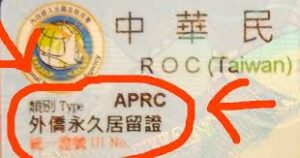
If you’ve been living in Taiwan for a while, you’ve likely heard expats talk about the APRC (Alien Permanent Resident Certificate) like it’s a golden ticket. For a long time, it was. But thanks to major legal updates that took effect in January 2026, the APRC has evolved from just a “permanent visa” into a powerful tool for career and financial freedom.
Whether you are a bilingual translator, an engineer, or an educator, here is why 2026 is the best year yet to secure your status.
1. Say Goodbye to Employer Sponsorship
The biggest headache for any expat is the “Work ARC.” If you lose your job, you usually have two weeks to find a new one or leave the country.
With an APRC, you own your residency. * The Open Work Permit: You can apply for a personal work permit that allows you to work for any company, freelance for five different clients, or even start that boba shop you’ve been dreaming about.
-
No Salary Floor: Standard ARCs require a minimum salary (approx. NT$48,000). APRC holders are exempt, meaning you can take part-time work or “passion projects” without risking your visa.
2. The “Once Every 5 Years” Rule
One of the most misunderstood benefits is the residency requirement. For those who earn their APRC through Professional Work (like translation, tech, or management), the old “183 days per year” rule is a thing of the past.
The 2026 Reality: Once you have your professional APRC, you only need to enter Taiwan once every five years to keep it active. You can move back home or travel the world for years at a time, and your right to live in Taiwan will be waiting for you when you return.
3. Financial Freedom and Social Safety Nets
In 2026, Taiwan has finally bridged the gap between foreign professionals and local citizens regarding benefits:
-
The New Labor Pension System: You are now eligible for the portable 6% employer-contributed pension. This money belongs to you and follows you from job to job.
-
Employment Insurance: If you are laid off, you can now access unemployment benefits and vocational training allowances—safety nets previously reserved for citizens.
-
Banking Power: Getting a mortgage, a car loan, or a credit card becomes significantly easier. Banks view an APRC as a sign of “permanence,” making you a much lower risk for credit.
4. Fast-Track for Graduates
Did you study in Taiwan? The 2026 amendments have introduced a “Degree Deduction” system that makes the wait for an APRC much shorter:
-
Ph.D. from Taiwan: Deduct 3 years (Apply after only 2 years of work).
-
Master’s from Taiwan: Deduct 2 years (Apply after 3 years of work).
-
Bachelor’s from Taiwan: Deduct 1 year (Apply after 4 years of work).
🔎 Quick Comparison: ARC vs. APRC (2026)
| Feature | Standard ARC | APRC (Professional) |
| Visa Renewal | Every 1–3 years | Never (Indefinite) |
| Work Rights | Restricted to one boss | Open (Work anywhere) |
| Leaving Taiwan | Risk of cancellation | Stay away for up to 5 years |
| Pension | Limited | Full New Pension Access |
| Safety Net | None | Unemployment Insurance |
The Bottom Line
The APRC is no longer just about staying in Taiwan; it’s about flexibility. It removes the “guest” status and gives you the same professional mobility as a local. If you are a bilingual translator or specialized professional, you are already on the path.
Are you curious if your specific job qualifies for the “Professional” fast-track? Leave a comment or reach out and I can help you check your eligibility!